

Buying property in Spain is a dream for many, whether it’s for a holiday home, a permanent move, or a smart investment. The good news? Spain is one of the most foreign-buyer-friendly countries in Europe, and both EU and non-EU citizens are legally allowed to purchase property.
Still, many buyers feel overwhelmed at the beginning. Questions like “Can I really buy as a foreigner?”, “Do I need residency?”, or “Is the process complicated?” are very common.
This guide gives you the big picture, without legal jargon or pressure — just the essential facts you need before going deeper.
Can Foreigners Buy Property in Spain?
Yes. Foreigners can legally buy property in Spain, whether you are:
- A resident or non-resident
- An EU citizen
- A non-EU citizen (UK, USA, Middle East, Asia, etc.)
You can buy:
- Apartments
- Villas
- New builds
- Resale properties
- Investment or holiday homes
There are no restrictions on ownership based on nationality.
EU vs Non-EU Buyers: What’s the Difference?
At the ownership level, there is no difference. Both EU and non-EU buyers:
- Have the same property rights
- Can buy in their own name or company name
- Can rent out or resell the property
The main differences appear later, in areas such as:
- Residency or visa options
- Mortgage conditions
- Length of stay in Spain
But when it comes to buying itself, the process is remarkably similar.
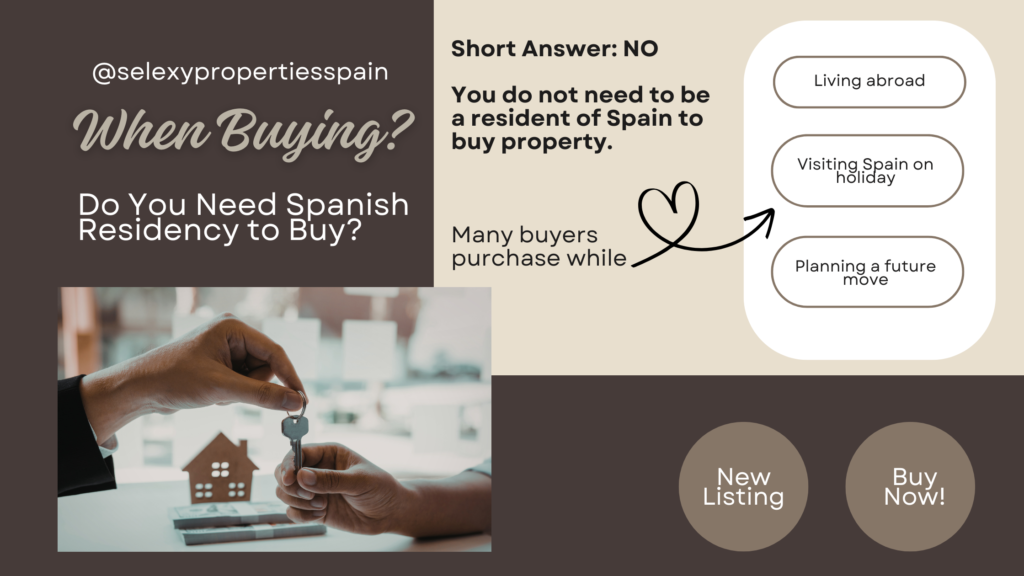
Residency becomes relevant only if you want to live in Spain long-term, not for ownership.
Why Spain Is So Popular With International Buyers
Spain consistently ranks among the top destinations for foreign property buyers — and for good reason:
- Stable and transparent property laws
- Strong protection of ownership rights
- Excellent climate and lifestyle
- Well-developed infrastructure
- Wide choice of properties and price ranges
- High demand for rentals in coastal areas
For many buyers, Spain offers a rare balance of lifestyle and long-term value.
One of the first things to clarify is your goal.
Buying for Lifestyle vs Buying for Investment
Some buyers are looking for:
- A holiday home
- A retirement property
- A future relocation plan
Others are focused on:
- Rental income
- Capital appreciation
- Diversifying investments outside their home country
Spain allows both – but the right location, property type, and strategy will differ depending on your goal. Understanding this early can save you time and money.
Common Myths About Buying Property in Spain
Let’s clear up a few misconceptions:
“Foreigners can’t get mortgages.”
Not true. Spanish banks do offer mortgages to both EU and non-EU buyers.
“You must live in Spain to buy.”
False. Many purchases are done remotely with legal representation.
“Buying in Spain is risky.”
Spain has one of the most regulated property systems in Europe — risks usually come from lack of guidance, not the system itself.
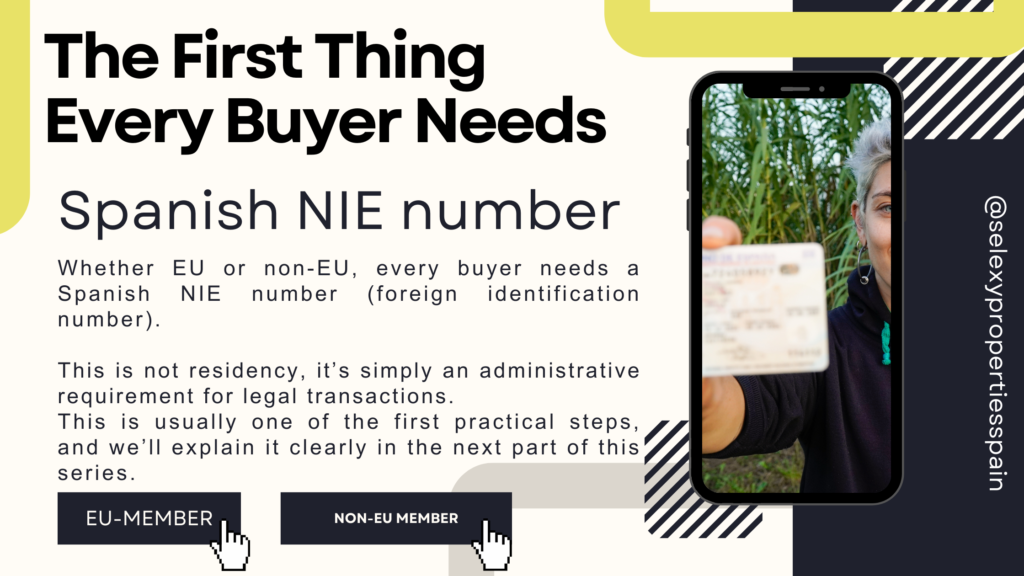
What Comes Next in the Smart Buying Guide
This article gives you the overview. In the next parts, we’ll break everything down step by step, including:
- The real differences between EU and non-EU buyers
- All costs involved (no hidden surprises)
- The full buying process from start to finish
- How to avoid common mistakes foreign buyers make
This Is Just the First Step!
Buying property in Spain is not something you rush, it’s something you understand step by step.
This guide is only the starting point for buyers and future buyers who want clarity before making decisions. Whether you are still researching or already planning to purchase, the smartest buyers are the ones who take time to learn how the system works before committing.
In the next guides and vlogs, we’ll go deeper into each stage of the buying process — from legal requirements and timelines to costs, financing, and common mistakes. Each topic will be broken down clearly, one by one, so you can move forward with confidence and avoid expensive surprises.
This is not about selling fast.
This is about buying smart.
Here are some topics we will cover in this SMART BUYING GUIDE SERIES
Step 1 — Who Can Buy Property in Spain? (EU vs Non-EU Buyers Explained)Step 2 — Legal & Administrative Requirements Before You Buy
Foundation knowledge before anything else.
- EU buyer rights and advantages
- Non-EU buyer rules and limitations
- Residency vs ownership explained
- Common misconceptions cleared
Step 2 — Legal & Administrative Requirements Before You Buy
What you need before viewing or reserving.
- NIE number explained
- Spanish bank account
- Power of attorney (when and why)
- Buying personally vs via company
Step 3 — Understanding the Buying Process in Spain (Step by Step)
From first viewing to keys in hand.
- Making an offer
- Reservation contracts
- Private purchase contract
- Completion at the notary
- Typical timelines
Step 4 — Costs, Taxes & Budget Planning (The Real Numbers)
Where most buyers get surprised.
- Purchase taxes (new build vs resale)
- Notary, lawyer & registry fees
- Ongoing ownership costs
- Rental & non-resident taxes
Step 5 — Financing & Payment Structure for Foreign Buyers
How buyers actually pay.
- Cash vs mortgage purchases
- EU vs non-EU mortgage conditions
- Down payments and guarantees
- Currency and international transfers
Thinking of Buying Property in Spain?
Getting informed early makes all the difference. A smart purchase isn’t about rushing — it’s about understanding the system and making confident decisions.
If you’re exploring buying or investing in Spain and want clear guidance tailored to your situation,
contact Selexy Properties Spain and let’s talk.
Gee H.
WHATSAPP: +34643800698
Published by: Gee Huysmans – January 30, 2026: 15:33 PM
Frequently Asked Questions: Property Buying Requirements in Spain
Foreign buyers in Spain need a small set of essential documents, including a valid passport or ID, a Spanish NIE number (foreign identification number), and the ability to open or use a Spanish bank account for payments and taxes. Depending on whether you buy as an individual or a company, additional documentation may apply.
In our next vlogs, we’ll break down each document step by step and explain how and when to arrange them.
A notary is legally required to complete the purchase in Spain, as all property transactions must be signed before a Spanish notary. While hiring a lawyer is not legally mandatory, it is strongly recommended for foreign buyers to ensure legal checks, contract review, and a smooth purchase process.
In upcoming vlogs, we’ll explain exactly what a lawyer checks, what a notary does, and why both roles matter.
The buying process in Spain typically takes several weeks to a few months, depending on the type of property, legal checks, financing, and whether the purchase is cash or mortgage-based. New builds, resales, and off-plan properties each follow different timelines.
We’ll cover realistic timelines, common delays, and how to avoid them in our next video guides.
Frequently Asked Questions for Dutch & Belgian Buyers Buying Property in Spain
Yes. Dutch and Belgian citizens can buy property in Spain without living in Spain. You do not need Spanish residency to purchase a property. Many buyers from the Netherlands and Belgium own holiday homes or investment properties in Spain while remaining tax residents in their home country.
In most cases, yes. While it is legally possible to buy without a Spanish bank account, having one is strongly recommended. A Spanish bank account is typically needed to pay purchase taxes, notary fees, utility bills, community fees, and local property taxes. Opening an account is straightforward for EU citizens.
As a property owner in Spain, you pay property-related taxes in Spain (such as property tax and, if applicable, rental tax). Your worldwide income and tax residency remain subject to Dutch or Belgian tax rules unless you officially become a Spanish tax resident. Spain has double taxation treaties with both the Netherlands and Belgium to avoid paying tax twice on the same income.